Search This Blog

Saturday, December 11, 2010

Flood Warning from NOAA/NWS

FLOOD WARNING
NATIONAL WEATHER SERVICE SEATTLE WA
1148 AM PST SAT DEC 11 2010

...THE NATIONAL WEATHER SERVICE IN SEATTLE HAS ISSUED A FLOOD WARNING
FOR THE FOLLOWING RIVERS IN WASHINGTON...

  SOUTH FORK NOOKSACK RIVER AT SAXON BRIDGE AFFECTING WHATCOM COUNTY.
  NOOKSACK RIVER AT NORTH CEDARVILLE AFFECTING WHATCOM COUNTY.
  NOOKSACK RIVER AT FERNDALE AFFECTING WHATCOM COUNTY.
  SKAGIT RIVER NEAR CONCRETE AFFECTING SKAGIT COUNTY.
  SKAGIT RIVER NEAR MT. VERNON AFFECTING SKAGIT COUNTY.
  NORTH FORK STILLAGUAMISH RIVER NEAR ARLINGTON AFFECTING SNOHOMISH
  COUNTY.
  SOUTH FORK STILLAGUAMISH RIVER NEAR GRANITE FALLS AFFECTING
  SNOHOMISH COUNTY.
  STILLAGUAMISH RIVER AT ARLINGTON AFFECTING SNOHOMISH COUNTY.
  SKYKOMISH RIVER NEAR GOLD BAR AFFECTING SNOHOMISH COUNTY.
  SNOHOMISH RIVER NEAR MONROE AFFECTING SNOHOMISH COUNTY.
  SNOHOMISH RIVER AT SNOHOMISH AFFECTING SNOHOMISH COUNTY.
  TOLT RIVER NEAR CARNATION AFFECTING KING COUNTY.
  SNOQUALMIE RIVER NEAR THE FALLS AFFECTING KING COUNTY.
  SNOQUALMIE RIVER NEAR CARNATION AFFECTING KING COUNTY.

.FLOOD BULLETIN NO. 2

HEAVY RAIN HAS BEGUN TO DEVELOP OVER FAR SOUTHERN WASHINGTON.
THE HEAVY RAIN IS FORECAST TO SPREAD NORTH AND CONTINUE TONIGHT
AND SUNDAY. HIGHER ELEVATION AREAS NORTH AND CENTRAL CASCADES ARE
LIKELY TO RECEIVE 4 TO 9 INCHES OF RAIN DURING THIS PERIOD. THIS
RAINFALL WILL DRIVE ALL MAIN STEM RIVERS...FROM THE NOOKSACK IN
WHATCOM COUNTY TO THE SNOQUALMIE IN KING COUNTY...ABOVE FLOOD STAGE.

MOST RIVERS WILL EXPERIENCE MODERATE FLOODING. SOME...INCLUDING THE
UPPER SKAGIT...THE LOWER SNOQUALMIE...AND THE SNOHOMISH...COULD
HAVE MAJOR FLOODING.

PRECAUTIONARY/PREPAREDNESS ACTIONS...

DO NOT DRIVE CARS...VANS...OR TRUCKS THROUGH FLOODED AREAS...THIS IS
THE CAUSE OF MOST FLOOD RELATED DEATHS IN WASHINGTON. BE ALERT FOR
RAPID CHANGES AND MONITOR DEVELOPMENTS BY LISTENING TO NOAA WEATHER
RADIO OR OTHER LOCAL MEDIA.

&&

WAC033-120447-
/O.NEW.KSEW.FL.W.0033.101212T1418Z-101213T1528Z/
/TOLW1.2.ER.101212T1418Z.101213T0000Z.101213T0628Z.NO/
1148 AM PST SAT DEC 11 2010

THE NATIONAL WEATHER SERVICE IN SEATTLE HAS ISSUED A

* FLOOD WARNING FOR
  THE TOLT RIVER NEAR CARNATION
* FROM SUNDAY MORNING TO MONDAY MORNING.
* AT 11:15 AM SATURDAY THE FLOW WAS 907.0 CFS.
* FLOOD FLOW IS 4500 CFS.
* MODERATE FLOODING IS FORECAST.
* FORECAST...THE RIVER WILL RISE ABOVE FLOOD FLOW AROUND 6 AM SUNDAY
  AND CREST NEAR 6200 CFS AROUND 4 PM SUNDAY. THE RIVER WILL FALL
  BELOW FLOOD FLOW SUNDAY NIGHT.
* IMPACT...AT 4500 CFS...THE TOLT RIVER WILL FLOOD TOLT RIVER RD AND
  MANY DRIVEWAYS. SOME HOMES IN THE SAN SOUCI AREA COULD BE
  INACCESSIBLE DUE TO DEEP AND QUICK FLOOD WATERS. THIS RIVER LEVEL
  ON THE TOLT CORRESPONDS TO A PHASE 3 FLOOD IN THE KING COUNTY FLOOD
  SYSTEM.

$$


Flood Warning

FLOOD WARNING
NATIONAL WEATHER SERVICE SEATTLE WA
1148 AM PST SAT DEC 11 2010

...THE NATIONAL WEATHER SERVICE IN SEATTLE HAS ISSUED A FLOOD WARNING
FOR THE FOLLOWING RIVERS IN WASHINGTON...

  SOUTH FORK NOOKSACK RIVER AT SAXON BRIDGE AFFECTING WHATCOM COUNTY.
  NOOKSACK RIVER AT NORTH CEDARVILLE AFFECTING WHATCOM COUNTY.
  NOOKSACK RIVER AT FERNDALE AFFECTING WHATCOM COUNTY.
  SKAGIT RIVER NEAR CONCRETE AFFECTING SKAGIT COUNTY.
  SKAGIT RIVER NEAR MT. VERNON AFFECTING SKAGIT COUNTY.
  NORTH FORK STILLAGUAMISH RIVER NEAR ARLINGTON AFFECTING SNOHOMISH
  COUNTY.
  SOUTH FORK STILLAGUAMISH RIVER NEAR GRANITE FALLS AFFECTING
  SNOHOMISH COUNTY.
  STILLAGUAMISH RIVER AT ARLINGTON AFFECTING SNOHOMISH COUNTY.
  SKYKOMISH RIVER NEAR GOLD BAR AFFECTING SNOHOMISH COUNTY.
  SNOHOMISH RIVER NEAR MONROE AFFECTING SNOHOMISH COUNTY.
  SNOHOMISH RIVER AT SNOHOMISH AFFECTING SNOHOMISH COUNTY.
  TOLT RIVER NEAR CARNATION AFFECTING KING COUNTY.
  SNOQUALMIE RIVER NEAR THE FALLS AFFECTING KING COUNTY.
  SNOQUALMIE RIVER NEAR CARNATION AFFECTING KING COUNTY.

.FLOOD BULLETIN NO. 2

HEAVY RAIN HAS BEGUN TO DEVELOP OVER FAR SOUTHERN WASHINGTON.
THE HEAVY RAIN IS FORECAST TO SPREAD NORTH AND CONTINUE TONIGHT
AND SUNDAY. HIGHER ELEVATION AREAS NORTH AND CENTRAL CASCADES ARE
LIKELY TO RECEIVE 4 TO 9 INCHES OF RAIN DURING THIS PERIOD. THIS
RAINFALL WILL DRIVE ALL MAIN STEM RIVERS...FROM THE NOOKSACK IN
WHATCOM COUNTY TO THE SNOQUALMIE IN KING COUNTY...ABOVE FLOOD STAGE.

MOST RIVERS WILL EXPERIENCE MODERATE FLOODING. SOME...INCLUDING THE
UPPER SKAGIT...THE LOWER SNOQUALMIE...AND THE SNOHOMISH...COULD
HAVE MAJOR FLOODING.

PRECAUTIONARY/PREPAREDNESS ACTIONS...

DO NOT DRIVE CARS...VANS...OR TRUCKS THROUGH FLOODED AREAS...THIS IS
THE CAUSE OF MOST FLOOD RELATED DEATHS IN WASHINGTON. BE ALERT FOR
RAPID CHANGES AND MONITOR DEVELOPMENTS BY LISTENING TO NOAA WEATHER
RADIO OR OTHER LOCAL MEDIA.

&&

WAC033-120447-
/O.NEW.KSEW.FL.W.0034.101212T1223Z-101213T2146Z/
/SQUW1.2.ER.101212T1223Z.101212T1800Z.101213T1246Z.NO/
1148 AM PST SAT DEC 11 2010

THE NATIONAL WEATHER SERVICE IN SEATTLE HAS ISSUED A

* FLOOD WARNING FOR
  THE SNOQUALMIE RIVER NEAR THE FALLS
* FROM LATE TONIGHT TO MONDAY AFTERNOON.
* AT 10:30 AM SATURDAY THE FLOW WAS 3506 CFS.
* FLOOD FLOW IS 20000 CFS.
* MODERATE FLOODING IS FORECAST.
* FORECAST...THE RIVER WILL RISE ABOVE FLOOD FLOW AROUND 4 AM SUNDAY
  AND CREST NEAR 35000 CFS AROUND 10 AM SUNDAY. THE RIVER WILL FALL
  BELOW FLOOD FLOW EARLY MONDAY MORNING.
* IMPACT...AT 30000 CFS...THE SNOQUALMIE RIVER WILL CAUSE WIDESPREAD
  FLOODING OF PASTURE LANDS AND ROADS ALONG THE RIVER FROM THE TOWN
  OF SNOQUALMIE DOWNSTREAM THROUGH FALL CITY. ROADS THAT MAY BECOME
  FLOODED INCLUDE FALL CITY-CARNATION...TOLT HILL...AND NOVELTY FLATS
  ROADS. THIS RIVER LEVEL ON THE SNOQUALMIE CORRESPONDS ROUGHLY TO A
  PHASE 3 FLOOD IN THE KING COUNTY FLOOD SYSTEM.

$$


Flood Warning

FLOOD WARNING
NATIONAL WEATHER SERVICE SEATTLE WA
1148 AM PST SAT DEC 11 2010

...THE NATIONAL WEATHER SERVICE IN SEATTLE HAS ISSUED A FLOOD WARNING
FOR THE FOLLOWING RIVERS IN WASHINGTON...

  SOUTH FORK NOOKSACK RIVER AT SAXON BRIDGE AFFECTING WHATCOM COUNTY.
  NOOKSACK RIVER AT NORTH CEDARVILLE AFFECTING WHATCOM COUNTY.
  NOOKSACK RIVER AT FERNDALE AFFECTING WHATCOM COUNTY.
  SKAGIT RIVER NEAR CONCRETE AFFECTING SKAGIT COUNTY.
  SKAGIT RIVER NEAR MT. VERNON AFFECTING SKAGIT COUNTY.
  NORTH FORK STILLAGUAMISH RIVER NEAR ARLINGTON AFFECTING SNOHOMISH
  COUNTY.
  SOUTH FORK STILLAGUAMISH RIVER NEAR GRANITE FALLS AFFECTING
  SNOHOMISH COUNTY.
  STILLAGUAMISH RIVER AT ARLINGTON AFFECTING SNOHOMISH COUNTY.
  SKYKOMISH RIVER NEAR GOLD BAR AFFECTING SNOHOMISH COUNTY.
  SNOHOMISH RIVER NEAR MONROE AFFECTING SNOHOMISH COUNTY.
  SNOHOMISH RIVER AT SNOHOMISH AFFECTING SNOHOMISH COUNTY.
  TOLT RIVER NEAR CARNATION AFFECTING KING COUNTY.
  SNOQUALMIE RIVER NEAR THE FALLS AFFECTING KING COUNTY.
  SNOQUALMIE RIVER NEAR CARNATION AFFECTING KING COUNTY.

.FLOOD BULLETIN NO. 2

HEAVY RAIN HAS BEGUN TO DEVELOP OVER FAR SOUTHERN WASHINGTON.
THE HEAVY RAIN IS FORECAST TO SPREAD NORTH AND CONTINUE TONIGHT
AND SUNDAY. HIGHER ELEVATION AREAS NORTH AND CENTRAL CASCADES ARE
LIKELY TO RECEIVE 4 TO 9 INCHES OF RAIN DURING THIS PERIOD. THIS
RAINFALL WILL DRIVE ALL MAIN STEM RIVERS...FROM THE NOOKSACK IN
WHATCOM COUNTY TO THE SNOQUALMIE IN KING COUNTY...ABOVE FLOOD STAGE.

MOST RIVERS WILL EXPERIENCE MODERATE FLOODING. SOME...INCLUDING THE
UPPER SKAGIT...THE LOWER SNOQUALMIE...AND THE SNOHOMISH...COULD
HAVE MAJOR FLOODING.

PRECAUTIONARY/PREPAREDNESS ACTIONS...

DO NOT DRIVE CARS...VANS...OR TRUCKS THROUGH FLOODED AREAS...THIS IS
THE CAUSE OF MOST FLOOD RELATED DEATHS IN WASHINGTON. BE ALERT FOR
RAPID CHANGES AND MONITOR DEVELOPMENTS BY LISTENING TO NOAA WEATHER
RADIO OR OTHER LOCAL MEDIA.

&&

WAC033-120447-
/O.NEW.KSEW.FL.W.0035.101212T1517Z-101214T1604Z/
/CRNW1.3.ER.101212T1517Z.101213T0600Z.101214T0704Z.NO/
1148 AM PST SAT DEC 11 2010

THE NATIONAL WEATHER SERVICE IN SEATTLE HAS ISSUED A

* FLOOD WARNING FOR
  THE SNOQUALMIE RIVER NEAR CARNATION
* FROM SUNDAY MORNING TO TUESDAY MORNING.
* AT 10:30 AM SATURDAY THE STAGE WAS 48.4 FEET.
* FLOOD STAGE IS 54.0 FEET.
* MAJOR FLOODING IS FORECAST.
* FORECAST...THE RIVER WILL RISE ABOVE FLOOD STAGE AROUND 7 AM SUNDAY
  AND CREST NEAR 58.2 FEET AROUND 10 PM SUNDAY. THE RIVER WILL FALL
  BELOW FLOOD STAGE MONDAY NIGHT.
* IMPACT...AT 58.0 FEET...THE SNOQUALMIE RIVER WILL CAUSE MAJOR
  FLOODING FROM FALL CITY DOWNSTREAM THROUGH CARNATION AND DUVALL.
  DEEP AND SWIFT FLOOD WATERS WILL INUNDATE MANY FARMS...RESIDENTIAL
  AREAS...AND ROADS.  FLOODING WILL OCCUR ALL ALONG THE RIVER
  INCLUDING HEADWATERS...TRIBUTARIES...AND OTHER STREAMS WITHIN AND
  NEAR THE SNOQUALMIE RIVER BASIN.

$$

Cancún 2010 (the Maginot Line revisted)

The United Nations Climate Change Conference in Cancún Mexico completed today, resulting in a broad multinational (non-binding) agreement to reduce greenhouse gas emissions globally. Given the lack of success of previous climate change conferences, the participants are to be lauded for coming to any agreement with this broad of a platform. Also given that as recently as 10 years ago some scientists were still skeptical about the impact of fossil-fuel carbon emissions on global climate change, from a political standpoint, what the UN accomplished at Cancún these past three weeks is actually pretty huge. And realistically, given the global economy right now, they probably could not have achieved any more than they did, at this point.


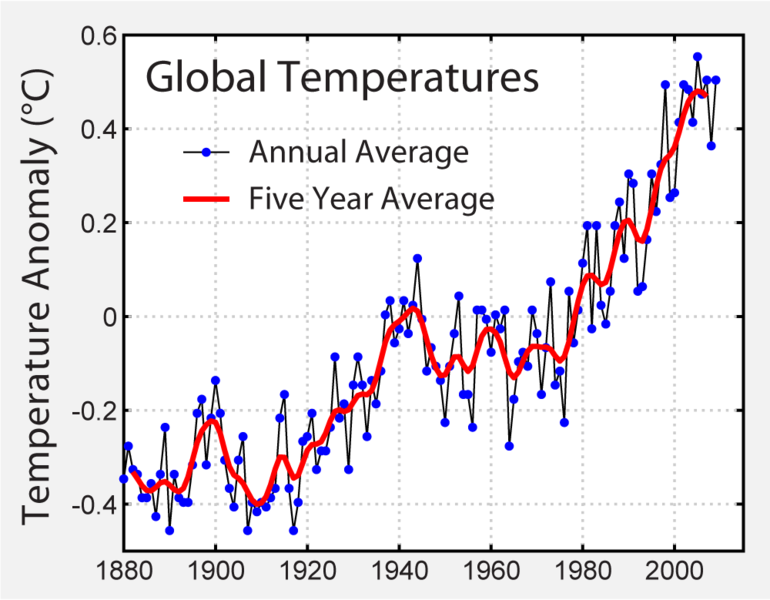
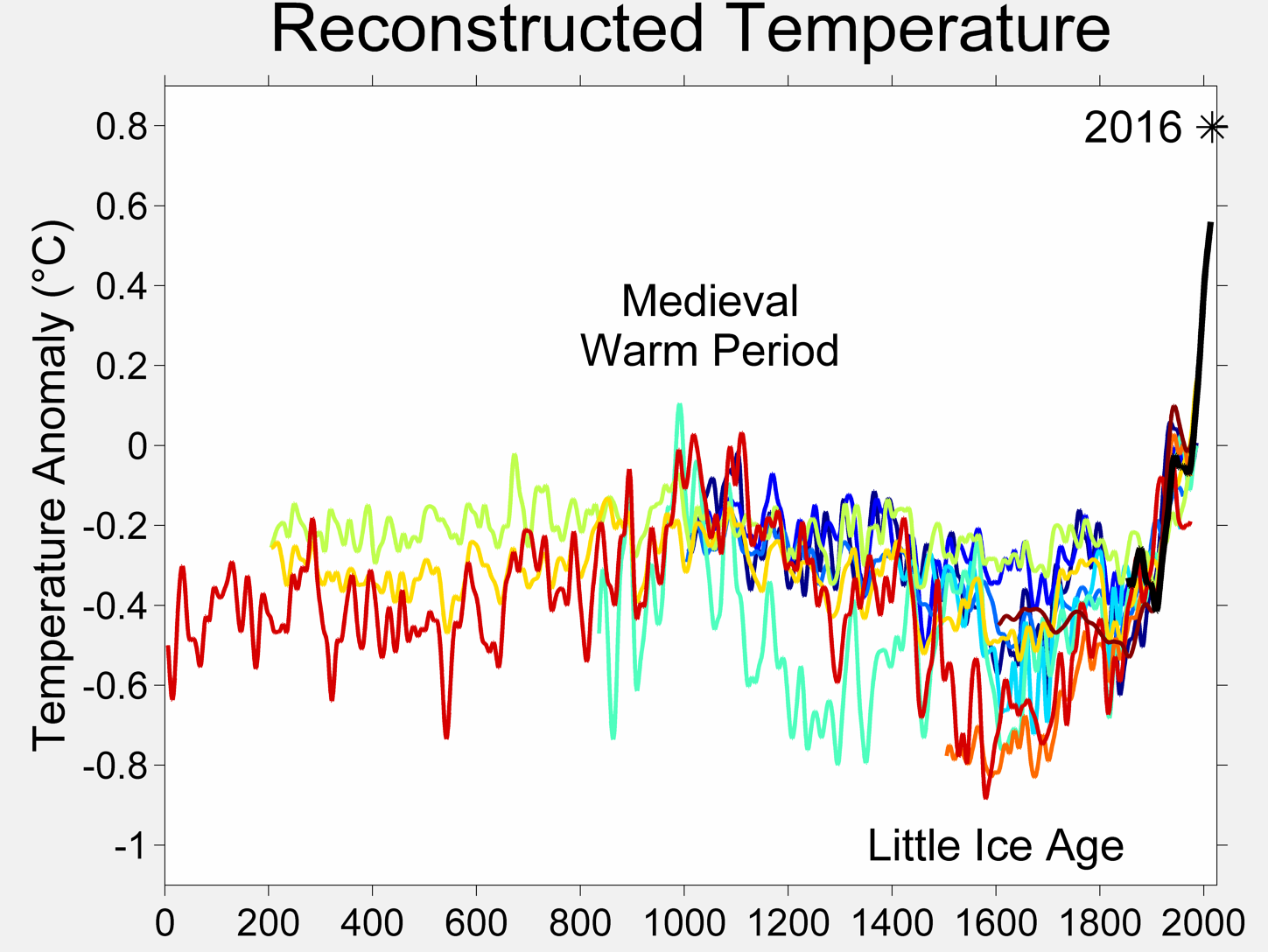
Unfortunately, what they achieved is still probably too little and too late to accomplish much more than slightly delaying the inevitable. The cornerstone of the agreement calls upon industrially developed and developing nations to limit greenhouse gas emissions and modify forestry practices to ultimately limit global temperatures to less than 2°C above pre-industrial levels. The problem is that global temperatures have already risen more than 1°C above pre-industrial levels, and we are both burning fossil fuels and deforesting at a far higher rate now than at any time since the industrial revolution. So while limiting global warming to 2°C is a noble goal, at this point it's frankly unrealistic.


Let's do a quick review of how the earth's temperature cycle works, and why it is that carbon emissions are such a problem for maintaining its equilibrium.

We start with the total amount of short-wave insolation (INcoming SOLar radiATION) entering the earth's atmosphere as 100%. About 36% of that is reflected back into space by clouds, the atmosphere or the land and water. Another 13% is absorbed into the atmosphere, and another 51% is absorbed into the earth and water. Subsequently, 56% of the toal insolation is re-radiated back to space from the atmosphere, and the remaining 8% is re-radiated directly from the land and sea back to space as long-wave radiation. So long as these numbers balance, temperatures on earth remain more or less constant. But even a tiny change in the amount of radiation entering or leaving the earth will slowly but continually increase or decrease the temperatures on earth's surface.

Greenhouse gasses such as carbon dioxide allow short-wave insolation to enter the earth's atmosphere and surface, but limit the amount of long-wave radiation re-radiated from the earth's surface to escape. Some amount of geenhouse effect is critical for human life on earth: without it,  average surface temperatures on earth would be around -20°C (-4°F), as opposed to the 15°C (59°F) we currently enjoy.

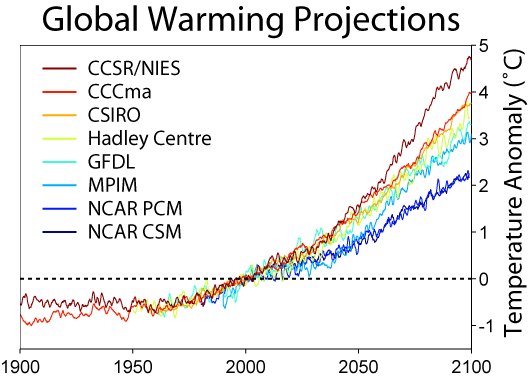
However, the industrial revolution and the subsequent burning of fossil fuels has altered the balance of greenhouse gasses in our atmosphere, and has also increased the heat input into our atmosphere at the same time. Since 1750 the concentrations of CO2  in our atmosphere have increased by 36%, and the concentrations of methane have increased by 148%. Increase the greenhouse gasses and you decrease the amount of radiation which can escape from earth back to outer space, without decreasing the radiation coming in from space. Equilibrium is disrupted, and the earth warms. The best projections based on the best modeling we have right now indicate that global temperatures by the end of the 21st century will be between 2°C and 5°C higher than what they are in 2010.


Which means that the UNCCC's goal of a "mere" 1°C increase is probably unobtainable.

All of this reminds me of the French reliance on the Maginot Line during the lead-up to World War II. Subsequent to the lessons in trench warfare learned in the first World War, France built a substantial network of fortifications along the French/German border to repel or at least delay a German invasion. Lesser fortifications were also built along France's border with Belgium. On 10 May 1940 Germany successfully attacked Fort Eben-Emael on the Belgian/Dutch border, and proceeded from there to breach the lesser fortifications on the Belgian/French border, effectively circumventing the Maginot Line altogether. The invasion of France was bloody and swift, and Paris fell on 14 June 1940. Even when flanked and attacked from behind the line, the Maginot held; only 10 of the 58 major fortifications of the Maginot Line were captured or destroyed. But the nation it was built to defend fell quickly to Nazi occupation.


The Cancún conference seems an awful lot like the Maginot Line. It's a fairly robust "fortification" to reduce the rate of increase of carbon emissions. But the existing levels of CO2  and methane have already exceeded the threshold necessary to cause runaway global warming. Unless we work aggressively to mitigate the damage which has already been done as well as drastically reducing future emissions, all of the work done at Cancún is just whistling in the graveyard.

The complete texts of the UN Climate Change Conference in Cancun (COP 16 / CMP 6) are available here:

COP 16 / CMP 6

Thursday, December 9, 2010

Enceladus, reconsidered

Early in this series on planetary outmigration I wrote off Saturn's moon Enceladus as being both too small and too distant. However, one aspect that I had not given serious thought to is the relative thinness of the surface ice, compared to the moons of Jupiter. Where Europa's ice is some 100km thick above her salty oceans and Ganymede's is close to 200km, the ice mantle on Enceladus is somewhere between 5km and 30km, with most estimates leaning toward the lower end of that spectrum. Now, compared to an average Arctic ice cap on earth of 3 to 4 meters, this is still an awful lot of ice. But when considering the time spent in transit from earth added to the time spent boring down to liquid water, Enceladus starts to compare pretty favorably to Jupiter's icy moons. But Enceladus is still tiny, which means her gravity is very weak (0.0113 earth gravities), which means that a 200 lb person would weigh a little more than 2 lbs. However, the surface radiation on Enceladus is quite low, and it is not entirely impossible that her very low gravity could be turned to an advantage.

Regardless of the difficulty in colonizing Enceladus, one thing is for certain. Any colony on the surface of Enceladus is going to have one hell of a view of Saturn, albeit edge-on through the rings.

Here are two composite photos which give a pretty good visual of the relative size of Enceladus:


Wednesday, December 8, 2010

Pearl Harbor, 7 December 1941

I wasn't able to post yesterday, but I wanted to recognize and remember the many vessels and crews who were lost on 7 December 1941 at Pearl Harbor. 

The attack began at 7:48 a.m. Hawaiian Time, and lasted 90 minutes total.
We often remember the USS Arizona, but many other vessels and aircraft were destroyed or severely damaged that day. The following is from www.pearlharbor.org.


Battleships:

USS Arizona (BB-39) - sunk, total loss, lies at bottom of Pearl Harbor
USS Oklahoma (BB-37)  - capsized, total loss
USS West Virginia (BB-48) - sunk, later raised, repaired and rejoined fleet July 1944
USS California (BB-44)  - sunk, later raised, repaired and rejoined fleet May 1944
USS Nevada (BB-36) - heavily damaged, grounded, repaired and rejoined fleet December 1942
USS Pennsylvania (BB-38) - was in drydock - slightly damaged, repaired and rejoined fleet August 1942
USS Maryland (BB-46) - damaged, repaired and rejoined fleet February 1942
USS Tennessee (BB-43)  - damaged, repaired and rejoined fleet March 1942.

Cruisers:

USS Helena (CL-50) - heavily damaged, repaired and rejoined fleet June 1942
USS Honolulu (CL-48) - damaged, repaired and rejoined fleet January 1942
USS Raleigh (CL-7) - heavily damaged, repaired and rejoined fleet July 1942

Destroyers:

USS Cassin (DD-372) - was in drydock - heavily damaged, rebuilt and rejoined fleet February 1944
USS Downes (DD-375) - was in drydock - heavily damaged rebuilt and rejoined fleet November 1943
USS Helm (DD-388) - damaged, continued on patrol, repaired and rejoined fleet January 1942
USS Shaw (DD-373) - in floating drydock - severely damaged and repaired

Minelayers:

USS Oglala (CM-4) - sunk, raised, repaired and rejoined fleet February 1944

Auxiliaries:

Seaplane Tender - USS Curtiss (AV-4) - damaged, repaired and rejoined fleet January 1942
Harbor Tug - USS Sotoyomo (YT-9) - with Shaw - sunk, raised, repaired and rejoined fleet August 1942
USS Utah (AG-16) - capsized, on bottom of Pearl Harbor
Vestal - heavily damaged, beached, refloated, repaired and rejoined fleet February 1942
YFD-2 - sunk, raised, refloated, repaired and rejoined fleet May 1942

In addition, the following aircraft were lost:

U.S. Navy - 92 lost, 31 damaged.
U.S. Army - 77 lost, 128 damaged.
Japanese - 9 fighters, 15 dive bombers, 5 torpedo bombers.

In all, 2,402 military personnel were killed, 1,247 military personnel were wounded, 57 civilians were killed 35 civilians wounded.  

Some Japanese officers desired a third wave of the attack focused on shipyards, depots and other naval infrastructure; had this occurred, Japan may well have won the war.

Japan formally declared war against the US on December 8th, and Germany and Italy formally declared war on the US on December 11th. World War II continued until 15 August 1945.

Monday, December 6, 2010

Europa and the Pirate Twins

Of the four Galilean moons of Jupiter, only the outer three have any potential for human habitation. Inner Io is almost literally hellish.

That leaves Europa, Ganymede and Callisto. Each of these have advantages and drawbacks. Let's look at each.

Europa

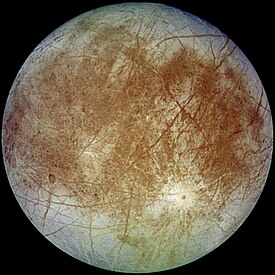
First off, let me state that from the standpoint of exploration and exobiolgy, Europa is the gold mine of our solar system. Europa is is by far the best candidate for extraterrestrial life of any of the Sun's worlds other than our earth. In fact, Europa has potential to host not only individual prokaryotic life, but colonial prokaryotes and possibly eukaryotes as well. Europa may actually be inhabited by megafauna analogous to that which existed on earth during the Ediacaran and Cambrian periods of earth's history. In simple terms, Europa's oceans may harbor life that would be readily recognizable as such by a casual observer without a microscope.

Which means that Europa is very likely off-limits for human colonization. Also, of the three moons Europa is the closest to Jupiter's radiation, receiving about 540 rem per day on the surface, which is a fatal dose for humans. The 100 kilometer thick ice mantle would provide adequate radiation shielding, but it takes a long, long time to bore through 100 kilometers of ice. 

Ganymede

Ganymede receives only 8 rem per day jovian radiation, which is not fatal in the short term but which would result in chromosomal damage in the long term. Ganymede's oceans lie some 200 kilometers beneath her surface, even less accessible than Europa's. At 5262 kilometers diameter Ganymede is larger than either our moon or Mercury, but because it is mostly made of water ice it's mass and gravity is significantly less than either of these, so this isn't really a very big advantage. Ganymede's oxygen atmosphere is also too thin to be of any real asset.

Callisto

Callisto is nearly as large as Ganymede, and has less liquid water beneath her rock and ice surface. However, she likely has ample water to sustain a significant human population, and is far enough away from Jupiter that she receives only a very acceptable 0.01 rem per day on her surface. In many ways Callisto is the least enticing of the outer Galilean satellites, but she may well be our single best option for colonization within the Jovian planetary system. From her surface Europa would also be much easier to study and explore. One thing about Callisto to consider, though, is that her orbit on the perimeter of Jupiter's gravity means she gets pelted by an awful lot of interplanetary debris, especially on the hemisphere facing away from Jupiter. Any colony on Callisto would definitely need to watch for falling rocks. On the other hand, any colony on Callisto would certainly be on the hemisphere facing Jupiter. All things considered, Callisto must be numbered on the short list of candidates for human outmigration.

Sunday, December 5, 2010

Discovery Triples Number of Stars in the Universe

This would seem to be the week for big announcements in astronomy. Yale University's Pieter van Dokkum has used Hawaii's Keck Observatory to discover that nearby elliptical galaxies, unlike our own Milky Way, have about three times as many red dwarf stars as previously anticipated. Which helps explain some of what was previously considered "Dark Matter", and also vastly increases the number of potential life-harboring worlds in our galactic neighborhood.

The implications of this are far-reaching, both for the realm of physics and exobiology. Interesting times.
==========================================
Astronomers have discovered that small, dim stars known as red dwarfs are much more prolific than previously thought -- so much so that the total number of stars in the Universe is likely three times bigger than realized.

Because red dwarfs are relatively small and dim compared to stars like our Sun, astronomers hadn’t been able to detect them in galaxies other than our own Milky Way and its nearest neighbors before now. As such, they did not know how much of the total stellar population of the universe is made up of red dwarfs.


Now astronomers have used powerful instruments on the Keck Observatory in Hawaii to detect the faint signature of red dwarfs in eight massive, relatively nearby galaxies called elliptical galaxies, which are located between about 50 million and 300 million light-years away. They discovered that the red dwarfs, which are only between 10 and 20 percent as massive as the Sun, were much more bountiful than expected.

“No one knew how many of these stars there were,” said Pieter van Dokkum, a Yale University astronomer who led the research, which is described in Nature’s Dec.1 Advanced Online Publication. “Different theoretical models predicted a wide range of possibilities, so this answers a longstanding question about just how abundant these star are.”
“We usually assume other galaxies look like our own. But this suggests other conditions are possible in other galaxies,” Conroy said. “So this discovery could have a major impact on our understanding of galaxy formation and evolution.”

For instance, Conroy said, galaxies might contain less dark matter -- a mysterious substance that has mass but cannot be directly observed -- than previous measurements of their masses might have indicated. Instead, the abundant red dwarfs could contribute more mass than realized.

In addition to boosting the total number of stars in the universe, the discovery also increases the number of planets orbiting those stars, which in turn elevates the number of planets that might harbor life, van Dokkum said. In fact, a recently discovered exoplanet that astronomers believe could potentially support life orbits a red dwarf star, called Gliese 581.


Full Article

Barsoom

This series of posts began with the announcement that NASA and DARPA were being funded to study a Mars to Stay program, meaning sending colonists to Mars and leaving them there without a return-trip ticket.

Mars has appealed to the human psyche as a substitute earth for centuries. And Mars is, arguably, the most earth-like of all the other worlds in the solar system. Unfortunately, "most earth-like" isn't actually enough earth-like to be helpful. In fact, it's just earth-like enough to be a real pain in the butt.


First off, there is an atmosphere on Mars, and very high winds. High enough winds to make thrust-only landings (like the Apollo missions did on the moon) impossible. Unfortunately, the atmosphere isn't dense enough to do much of anything other than disrupt landings, and provide some small amount of protection against solar radiation. The average atmospheric pressure on the surface of Mars is about 6 millibars. For comparison, the highest atmospheric pressure ever recorded on earth at sea level was 1086 millibars in Tonsontsengel Mongolia on 19 December 2001, and the lowest atmospheric pressure ever recorded on earth at sea level was the eye of Typhoon Tip on 10 December 1979, at 870 millibars. The lowest barometric pressure recorded at the summit of Mount Everest is 337 millibars, which is just about the bottom threshold to support human (or other non-aquatic vertebrate) life. The Armstrong Limit, below which saliva and tears (but not blood within the body) at normal body temperature boil, and below which a pressurized suit or ship are absolutely required for survival beyond a minute or so, is about 62 millibars. The highest pressures on Mars are about 10% of the Armstrong Limit.

Also, Mars is very cold. The very coldest temperature recorded on the earth's surface was -89°C (-129°F) at Vostok Station, Antarctica, on 21 July 1983. The highest air temperatures recorded on Mars are -17.2° C (+ 1° F), the lowest  -140°C (-220°F), with a mean of  -63°C (-81.4°F). The highest recorded soil temperature is +27° C (+81° F), but the atmospheric density is too small for that to warm the air to any significant degree more than a few centimeters above the surface. So your feet could be comfortably warm, but the rest of your body would be subarctic.

Martian gravity is about 38% of that on earth. Which isn't ideal, but it is significantly better than any of the candidate moons (Europa, Ganymede, Callisto or our own Luna). The other big advantage is that Mars has water ice, possibly lots of it, very near the surface. And, compared to our moon with its rather finite number of good candidates for surface colonization, pretty much any location on Mars is as good or bad as any other. This isn't to say that there aren't sites which are better than others, but most of the second-tier sites are not that much worse than the first-tier ones. Which means that, once we start colonizing, we can make (and sustain) pretty large colonies. And eventually, settlements rather larger than "colonies".

This is the greatest appeal, I think, to colonizing Mars, rather than the moon or an orbital space station. The potential scale is limitless.

The main advantages of colonizing Mars over colonizing the Jovian moons are proximity and ease of colonization. But there are ethical considerations as well. We may find that the icy moons of Jupiter and Saturn are already colonized.