Search This Blog

Thursday, March 31, 2011

Steam Engine Time

Back in early November of last year NASA and DARPA announced that they were quietly moving forward with Project Orion, the "100-year starship" first designed in the late 1950's and then scrapped due to Cold War politics. At that time I wrote what turned out to be only the first in a large number of posts about Orion. In the course of researching that post I went, among many other places, to Wikipedia. At the time they had a very short article on Orion, with very little real information.

This afternoon I started researching Orion for yet another upcoming post. I'm planning to write a bit about what the voyage planning and living conditions would be like on an 88-year trip to Alpha Centauri. I needed to get dimensions of the payload space to begin planning how that could be parsed out among 1000 colonists and everything they would need to survive that long, and how that would then transition to colonizing a world without oxygen, four light years away from the nearest COSTCO.

So, shamelessly, I went back to Wikipedia. I was shocked and pleased to find that the current article on Orion had about five times as much information as had been there in November.

I'm also seeing references to Orion cropping up in some unusual places. Non-science-y places. It seems like a general awareness of the Orion Project is slowly creeping into our collective conscious. I think when people learn that we've had the technology to build a ship to the nearest stars since the Eisenhower administration, but that we haven't actually bothered to do so, they're pretty appalled. That's good. It's reasonably appalling.

The fact that Orion planning has survived the DARPA budget cuts so far, in this year of mindless runaway budget disemboweling, is very telling.

The steam engine was actually first invented by Hero of Alexandria in the 1st century CE, but nothing was really done with it until the late 1700s, when suddenly inventors all around the world, independently of each other, began inventing and applying steam engines. Planet earth had finally reached "steam engine time", and so the world steam-engined.

We may have reached whatever critical mass is necessary to start finally building a nuclear pulsed-fission ship to the stars. It's Orion time.

Tuesday, March 29, 2011

Barsoom, again.

So far we've discussed our options for permanent human colonies within the solar system, and we've examined the current state of interstellar travel and the stars we can reasonably hope reach within a human lifetime. Our search for a home outside of the solar system has been narrowed, essentially, to Alpha Centauri. We have established the possibility (without assigning probability) of habitable worlds there.

We have the technology, right now, to launch a colonial expedition to Alpha Centauri. But we cannot in good conscience do so until we have some idea that they will find a suitable world once they get there.

Our parameters for what constitutes a "suitable world" narrow considerably when we are talking about an 88 year one-way trip.

The world must be well within the habitable zone of the star, and there should be plenty of liquid water on the surface. The size and gravity of the planet should be very similar to earth's. The atmosphere should be dense enough for a person to be able to walk around in it without protection. The atmosphere should not be corrosive or toxic. A person should be able to walk around comfortably wearing no more equipment than a respirator and an oxygen source.

The atmosphere should not, however, contain oxygen. Because oxygen would mean that the planet had already been colonized.

The bottom line is this. Any conceivable candidate for human settlement around the stars of Alpha Centauri needs to be a helluva lot more hospitable than Mars. Because Mars is much, much closer.

The good news is that we currently have the technology, and soon will have the ability, to determine if any earth-sized planets exist within the habitable zones of Alpha Centauri. The NASA mission (SIM, the Space Interferometry Mission) to do so was officially defunded in 2010, so it will be up to other countries or private interests to continue this research. Hopefully Europe, India, Russia or China will take the lead in the Space Race and keep the ball rolling. The United States, unfortunately, seems to have thrown in the towel. But this is a venture "for all mankind", so it really doesn't matter who does the work, so long as the work gets done.

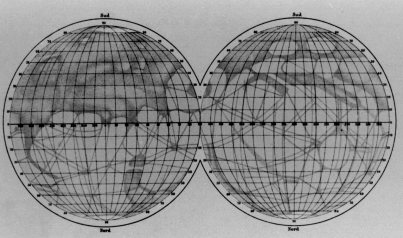
If earth-sized planets are found within any of the habitable zones of Alpha Centauri, the next step is to determine, from here, what the atmospheric composition and hydrography of the world is, and generally learn as much as we can from earth or earth-orbit before beginning the process of sending people there. Amazingly enough, it is probably possible, right now, to build a space-hypertelescope which would give us as much information about a planet around Alpha Centauri as Giovanni Schiaparelli's telescope gave him about Mars.


The telescope is currently called the Exo-Earth Imager (EEI). It consists of multiple orbital mirrors focused into a single telescope, and could presumably be improved upon once it was operational by adding more mirrors. From 10 light years away (more than twice the distance to Alpha Centauri), earth would look like this:


From such imagery we could make some pretty good assumptions about a planet. Or, like Schiaparelli and Percival Lowell, we could make some really bad assumptions. But it's a starting place.

Monday, March 28, 2011

2 dead, 8 injured as sailboat sinks off San Diego Bay

Wow. Who would have guessed that a 25' sailboat was too small to carry ten people?

And the kids survived, so they can't even get a Darwin Award for their efforts.

Ten people. Really. Stability and trim, kiddies; it's not rocket science.

============================================

SAN DIEGO (AP) — Ten people were thrown into the waters of San Diego Bay Sunday when their sailboat capsized, leaving two men drowned and eight people injured, authorities said.

The boat flipped over for reasons that remained unclear and then sank near Shelter Island shortly after 5 p.m., San Diego Fire-Rescue spokesman Maurice Luque said.

Harbor police pulled all 10 from the water and took them to a boat dock where some 60 firefighters and paramedics were waiting. Two men in their 50s or 60s were declared dead at the scene and the other eight were taken to local hospitals. Two children were released from the hospital after being treated briefly.

Luque said none of the injuries was life-threatening or critical.

Though just 10 people were reported to be aboard, divers searched the sunken wreckage for any additional victims.

"We are confident that everyone is accounted for," Luque said.

One woman was being treated in intensive care at UCSD Medical Center for hypothermia, said Marguerite Elicone, a spokeswoman for the Port of San Diego, which includes the Harbor Police.

Most of those on board were members of an Asian family, and investigators had to bring in translators to speak to them, Luque said. He did not know what language they spoke. No victims' names were immediately released.

Harbor Police officers were at the 25-foot boat within five minutes after a Navy vessel reported the boat capsized, Elicone said.

"They were pulling people out of the water. There were also civilians assisting in pulling people out of the water," she said.

No other vessels were involved, Elicone said. There were several witnesses but the spokeswoman said she didn't know what they saw.

Harbor police were leading the investigation into the cause. The U.S. Coast Guard also responded to the scene.

Phone messages left for the Coast Guard were not immediately returned.

Sunday, March 27, 2011

Tatooine

So far we've looked at all three of the Alpha Centauri stars individually for potential habitable planets. There are, however, other possible planetary orbits in a binary or trinary star system.

I remember the first time I read the opening words of the original Star Wars:

It was a vast, shining globe and it cast a light of lambent topaz into space -- but it was not a sun. Thus, the planet had fooled men for a long time. Not until entering close orbit around it did its discoverers realize that this was a world in a binary system and not a third sun itself.

Immediately I thought of Alpha Centauri, and the possibility that Proxima was really a planet like Tatooine (yes, I was that 12-year-old). Proxima isn't a planet. But it is possible for a planet to orbit both stars of a binary system.

Here is what we see most typically:

If the two stars in a binary system are less than three astronomical units apart, the planetary disk tends to form around both of the stars, like Tatooine. If the stars are separated by greater than fifty astronomical units then the planetary disks form around the individual stars. Between three and fifty AU a planetary disk is less likely to form.

The distance between Alphas Centauri A and B is between 11 and 36 AU, averaging 24 AU. This would seem to indicate that a planetary disk around either star is unlikely, however we believe there happen to be planetary disks around both A and B.

A "Tatooine-like" orbit around both stars would take the planet far outside of the habitable zone; it would be rather more like Hoth than Tatooine, except that humans truly could not live there.

All that said, a world around either of the two major stars of Alpha Centauri would, occasionally, be afforded really spectacular twin sunsets.

Stupid Star Wars trivia: The planet Tatooine is never actually named that at any point in the first movie (what eventually became Episode IV of the series). During the filming it was called Utapau, which name was ultimately given to one of the worlds in Episode III.

Friday, March 25, 2011

Compassion, America?

The death toll from Japan's 11 March earthquake and tsunami officially surpassed 10,000 lives yesterday. More than 17,440 people are listed as missing, and 2,775 as injured. Hundreds of thousands remain homeless. And the Fukushima reactor situation continues to degrade toward an accident on par with Chernobyl.

The US media (and apparently a substantial number of US citizens), meanwhile, is fixated on the possible threat of radiation from Fukushima somehow impacting the US west coast. Really.

The highest radiation levels seen in the US since the earthquake have been recorded in San Francisco. As of Wednesday the radiation levels above baseline there were as follows. In picocuries per meter cubed.

Cesium-137: 0.0013
Tellurium-132: 0.0075
Iodine-132: 0.0066
Iodine-131: 0.068

Here in Seattle we're seeing:

Cesium-137: 0.00045
Tellurium-132: 0.0034
Iodine-132: 0.0029
Iodine-131: 0.013

Picocuries. That's right, the west coast of the United States is freaking out over about the same level of radiation they might receive if their house or apartment had a single brick sitting across the street from it. For one day.

Get a grip, America. People in Japan, tens of thousands of them, are dead or dying. By the end of this the death toll will likely be about that of the first day of the atomic bombing of Nagasaki. Which, incidentally, deposited rather more radioactive fallout on the US than the worst-case scenario at Fukushima possibly could. Let's focus on the real problems in Japan instead of this media-created and selfish fear-mongering. A little human decency goes a long way.

Here's the gross-count gamma rate for San Francisco as of today, as monitored by the EPA:

Thursday, March 24, 2011

Pandora and the Comet Empire

Our third and final candidate in the Alpha Centauri star system is Alpha Centauri B, a K1-class orange dwarf star just a bit smaller than our sun. It also happens to be the star of the moon Pandora in James Cameron's movie Avatar.


Alpha Centauri B is slightly less "sunlike" than Alpha Centauri A. However, computer modeling of accretion patterns from the protoplanetary disks results in an earth-sized rocky planet neatly inside the liquid-water habitable zone of Alpha Centauri B on more modeling runs than not. This is not true of Alpha Centauri A, although it is certainly possible that a planet from another orbit might have been captured into a habitable zone orbit of A.

The first salient question which arises is whether or not a planet within, say, 50% of earth's mass in either direction, actually exists in the habitable zone of Alpha Centauri A or B (or Proxima, for that matter).

We don't know if any such planets exist, yet. We do know what does not exist. There do not appear to be any planets in the Alpha Centauri system larger than five times the earth's mass. No gas giants like Jupiter or Saturn, no ice giants like Uranus and Neptune, around any of the three Alpha Centauri stars. Sorry, Mr Cameron. At the very least, the absence of any giant planets in the system means that the orbits within the habitable zones of each of the three stars are available for earth-sized rocky planets, should they happen to exist.

One possibility that we cannot discount yet is that there are no planets in the Alpha Centauri system at all. Given that each of the three stars are distant enough from each other to have had independent protoplanetary disks, and given the high metallicity of each of the three stars ("metal", to an astronomer, is any element heavier than hydrogen or helium), the simple law of averages would seem to indicate that there are planets around at least one of the Alpha Centauri stars, if not all three. But right now we don't know that for sure, because we do not yet have the means of detecting planets as small as we're hoping to find. NASA had a mission well underway to build and launch an interferometry telescope called SIM for specifically this purpose, but it's funding was cut in 2008 and the program was canceled. Hopefully Russia, China, India, the European Union or some private interest will pick up the ball that the United States has dropped and run with it, because a lot of decision making is going to depend on that information.

But, the best computer modeling we currently have for planetary accretion shows that earth-like planets should have formed around Alpha Centauri B, and Jupiter-like and Neptune-like planets should not have. Observation seems to confirm the modeling regarding giant planets; whether it will also confirm the modeling regarding small, rocky planets, only time will tell. Here is the research of Ji-Wei Xie, Ji-Lin Zhou, and Jian Ge of Nanjing University and University of Florida at Gainesville, respectively, regarding planetary accretion around Alpha Centauri B:

http://arxiv.org/PS_cache/arxiv/pdf/1001/1001.2614v1.pdf

Given that it is possible for earth-sized worlds to exists within the habitable zone of Alpha Centauri B, the next question is, "how habitable"?

Alpha Centauri A and Proxima would likely serve the function of clearing the majority of asteroids and comets out of the way, so that a world around Alpha Centauri B would not be constantly pummeled. On the other hand, at least some of earth's water came from comets, so some cometary activity is probably useful. As it stands, we really don't know how most of the water on earth (or Europa or Enceladus or Mars or...) got there, so a better understanding of the role of cometary hydration would go a long way toward understanding how the unique trinary gravitational profile of the Alpha Centauri system is going to affect the hydrographic percentage of its worlds.

New technology is needed to help us image the Alpha Centauri system before sending even robot probes four and a half light-years away. The new technology is almost ready to implement. More on that, soon. With luck and perseverance we should know within the next few years whether or not there are planetary candidates worthy of further exploration around the stars of Alpha Centauri.

Or, you know, three-meter tall naked blue people.

Tuesday, March 22, 2011

A, B, or both A and B

Our next candidate in the Alpha Centauri system is Alpha Centauri A, a G2V star like our own sun. It is about 10% more massive than our sun, but is otherwise the most "sunlike" of any star on our list. It is locked into a binary orbit with the slightly smaller and dimmer Alpha Centauri B, which will be the topic of tomorrow's post.

Alpha Centauri A and B orbit each other in a period of about 80 earth years, during which time they come as close to each other as the sun and Saturn, to as far away from each other as the sun and Pluto. Each has a habitable zone far enough away from the other that it is not seriously affected by the other star. So, theoretically, there may be planets within the habitable zones of both A and B.

Our searches so far have not detected planets around either A or B, which eliminates the possibility of planets any larger than five times as massive as the earth around either star. There is, however, some reason to believe that earthlike planets may have formed (or may have been gravitationally captured) into the habitable zones of these stars. Planets have already been detected orbiting similar binary star systems, such as Gamma Cephei.

For a planet to be a good candidate for human habitability around Alpha Centauri A it would need to be about 1.25 times the earth's distance from the sun. It is possible, based on current modeling, that an earth-sized rocky planet may have formed there. However, it is also possible that no planets have formed around Alpha Centauri A at all. There is also some concern that the absence of a gas giant planet such as Jupiter or Saturn may indicate a lack of cometary activity in the inner star system, which would mean that the planets of both Alphas Centauri could be bone dry. However, the very fact of the binary nature of the system, plus distant Proxima, means that it is likely that either Kuiper Belt comets or Oort Cloud comets are diverted into the inner star system.

As we will see tomorrow, Alpha Centauri B is a much better candidate for a human habitable planet. But the combination of both stars, plus Proxima, makes Alpha Centauri singularly intriguing, even if it didn't happen to be our closest neighbor.